
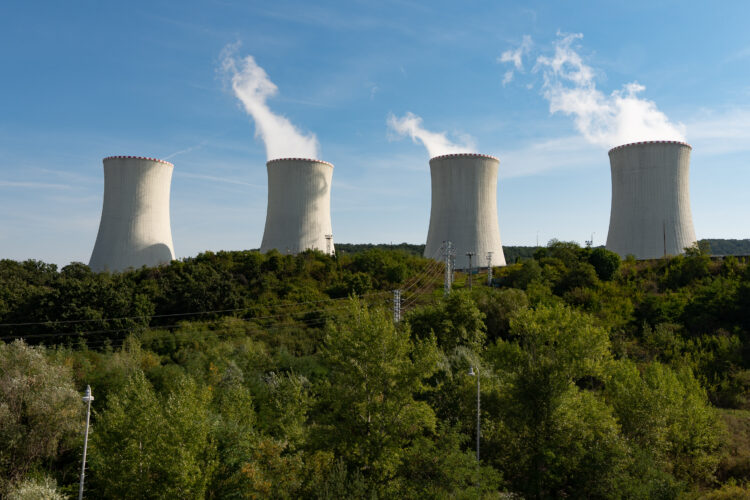
Fuel loaded, reactor assembled, and a tear in the eye ready to sparkle. With the loading of the fuel assemblies, the inactive testing phase has come to an end – a phase in which our company played no small part.
And What Part Would That Be, You May Ask?
Following the completion of the cold hydro test and a Small Revision, we were ready – together with the client and other key suppliers – to commence the much-anticipated hot hydro test. This test verified the entire primary circuit, including the integral parts of its loops and the reactor systems. Just a brief recap: the hot hydro test comprises a comprehensive set of checks designed to confirm the functionality of primary and selected secondary circuit systems under normal operating conditions, during key system failures, and in specific emergency scenarios.
ENSECO’s Scope of Systems:
- Continuous Primary Coolant Purification System
- Chemical and Volume Control Systems
- Primary Circuit Controlled Leakage System
- Steam Generator Blowdown and Drains
- Boric Acid Replenishment and Chemical Reagent Dosing System
- Emergency Core Cooling Systems (ECCS)
- Passive Emergency Core Cooling System – Hydraulic Accumulators
- Hydrogen Recombiner System
- Steam Generator Blowdown Water Purification System
- Leaks and Coolant Treatment System
- Pool and Emergency Tank Water Purification System
- Containment Pressure Drop System and Radioactive Leak Localization System – Bubbler Condenser Troughs
- Post-Seismic Emergency Core Cooling System
- Spent Fuel Pool Cooling System
- Waste Water System
With hot hydro tests completed and the Large Revision program finalized, Unit 4 was ready to proceed with ceremonial fuel loading, which took place on 29 June 2026 in the presence of senior representatives of the Slovak Republic.
This process was completed on 3 July with the loading of the final fuel assembly. This was followed by pre-critical testing, reactor installation, and further tests necessary for the first controlled fission reaction. The reactor core was then subject to another series of tests verifying the so-called neutron-physical characteristics. Once the physical testing was over and the Nuclear Regulatory Authority of the Slovak Republic issued its consent, the final stage of Unit 4 commissioning began on September 21, 2026. The readiness of the power unit will be verified through a gradual increase of power until the nominal power output is achieved and Unit 4 begins delivering its first megawatts.
Our activities will be completed by achieving a successful 144-hour trial run, providing the final confirmation of the reliability of our systems, followed by the signing of the Preliminary Acceptance Certificate (PAC).