
Project Duration: 2025 – 2026
Main Project Objectives:
From an environmental perspective, the project focused on reducing the consumption of natural gas, which had previously been the primary heat source for drying and firing ceramic products. The production of fired clay bricks is highly energy-intensive, resulting in a significant environmental impact in the form of elevated CO₂ emissions.
Originally, approximately 94 % of the total energy consumed in the plant was thermal energy, and about 6 % electrical energy. Electrical energy is used to power machinery and equipment, electric motors, rotating machines, compressed air generation systems, and related technologies. Thermal energy is required for the most energy-intensive production processes: brick drying and firing (90 %) and steam generation (10 %). Natural gas accounted for 42 % of the energy used in the brickworks, while 52 % of the energy was generated from additives incorporated into the production process.
Following project completion, the expected average annual reduction in CO₂ emissions at the Wienerberger Boleráz plant is at least 36.8 % compared to the average annual emissions during the reference period, representing a reduction of approximately 6,430 tonnes of CO₂ emissions per year.
How to Achieve This?
Decarbonisation was achieved by reducing natural gas consumption in the tunnel kiln and dryer, while also eliminating the use of fossil-based additives
Decarbonization Measures Implemented
- As part of the drying process, a high-temperature final drying stage for ceramic products was introduced using recovered waste heat from the tunnel kiln.
- Warm air previously extracted from the kiln and used for drying bricks was partially replaced by heat recovered from a low-temperature heat source using heat pumps.
- Heat generated in the cooling zone of the tunnel kiln is now used to preheat combustion air for the firing process. At the same time, new lightweight kiln cars were installed. Their redesigned refractory bed construction reduces the amount of refractory material required per kiln car, resulting in lower natural gas consumption.
- In the raw material preparation process, fossil energy additives (slag and petroleum coke) were replaced with biogenic alternatives in the form of sunflower hulls.
Scope of Civil Works and Electrical Installation
- The existing drying chamber No. 5 was converted into a high-temperature final drying chamber utilising waste heat recovered from the firing kiln. New rail tracks were installed with the same spacing as in the remaining drying chambers.
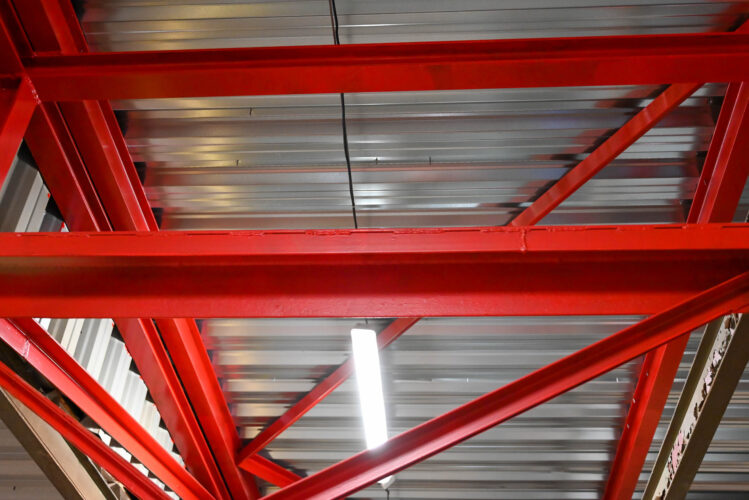
- A new steel structure with thermal insulation was erected, including a new entrance vestibule separated by roller shutter doors.
- A completely new building for the sunflower hull processing line was constructed, including a reinforced concrete foundation slab, steel structure, building cladding, door and window openings, lighting, lightning protection, and grounding systems.
- The existing garage building was converted into a heat pump plant room. The reconstruction included demolition of the original steel and masonry structures and construction of new foundations, reinforced concrete load-bearing structures, masonry infill walls, ceiling structure, and building openings.
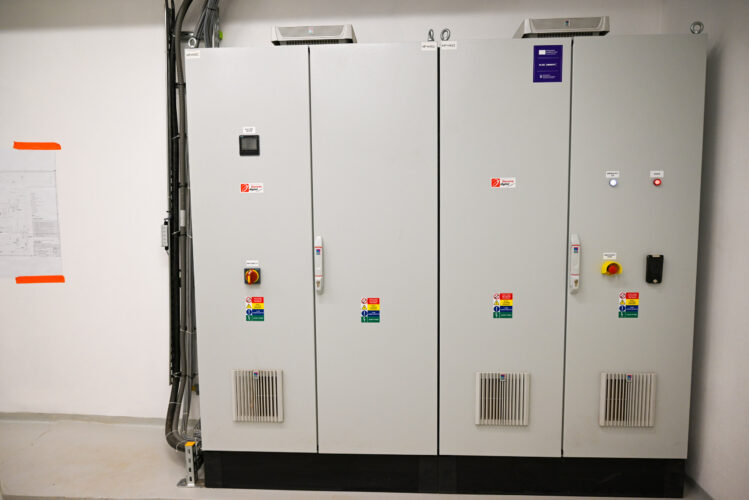
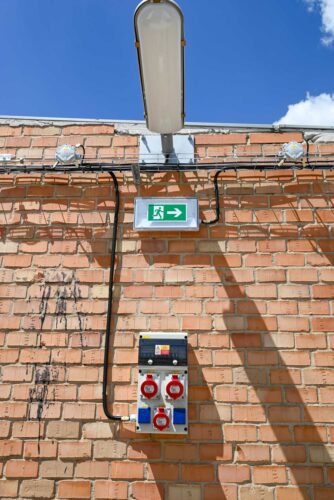
- Forced ventilation and electric heating systems were installed in the heat pump building. Electrical works included lighting and power installations, lightning protection, LV switchboards, and cable distribution systems.

Scope of Mechanical Installation Works
- Installation of drying cars (2 × 19 units), handling and safety equipment (pushing devices, transfer tables, brakes, position detection systems, roller shutter door controls), and a control desk in drying chamber No. 5. 5.
- Supply and installation of HVAC equipment (rotomixers, fans, ductwork, and associated equipment) for drying air distribution and extraction of excess warm air from chamber No. 5. 5.
- Installation of new kiln cars equipped with lightweight refractory ceramic beds, significantly reducing the weight of each car.
- Dismantling of the existing tunnel kiln hot-air distribution system, including fans, HVAC ductwork, gas burners, gas piping, and electrical installations.
- Supply and installation of a new hot-air distribution system for the tunnel kiln (up to 500°C), including a hot-air fan with accessories, high-velocity gas burners, valve assemblies for combustion air control and gas pressure regulation, and a complete burner system.
- Supply and installation of a kiln car cleaning system, including extraction equipment, HVAC ductwork, an external filtration unit, an extraction fan, and a compressed-air cleaning unit for filter regeneration.
- Supply and installation of a complete technological line for sunflower husk feeding, conveying, and crushing, integrated into the existing conveying routes.
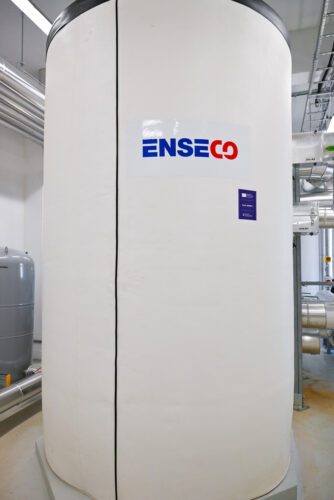
- Installation of two hot-water buffer tanks, heating water circulation pumps, HVAC routes, hot-water piping systems, and associated valves within the heat pump building. Air-to-water heat exchangers and radial air fans were installed on the dryer roof.
- Installation of data cabling, instrumentation, and control (I&C) components, and process control system equipment.


Commissioning and Testing
Initial inspections of classified technical equipment were carried out in accordance with the Slovak Ministry of Labour Regulation No. 508/2009 Coll. Pressure and tightness tests, functional tests, individual equipment tests, and integrated commissioning tests were subsequently performed in the presence of the client’s representatives.
Following the successful completion of all tests and issuance of the required approval by the Building Authority, the installation was placed into trial operation.

List of Installed Equipment
PS 103 Manufacturing Hall and Dryer
Push/pull system in drying tunnel No. 5; 38 new drying cars; 2 radial exhaust fans for moist air extraction – 68,300 m³/h each; 2 radial exhaust fans for moist air extraction – 86,600 m³/h each; transfer and pushing equipment; 85 new kiln cars for the tunnel kiln; 4 axial exhaust air fans; 2 air-to-water heat exchangers; 8 rotomixers; dust separation system for kiln car cleaning (cleaning and extraction module integrated into the kiln car track and an external extraction and filtration unit); 6 high-velocity gas burners


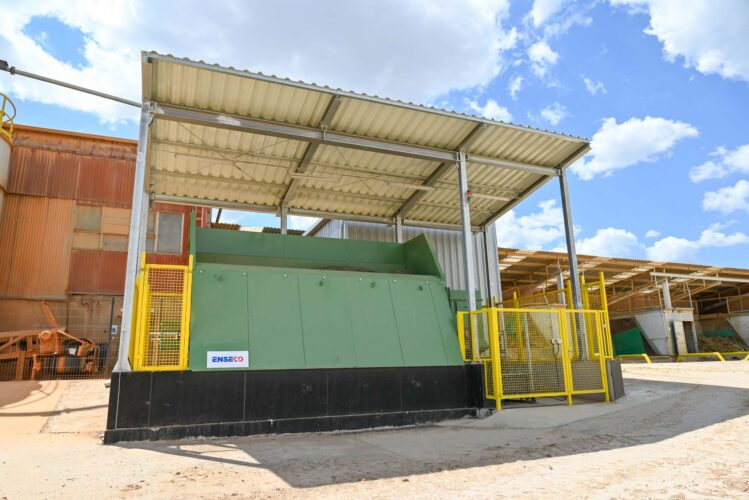
PS 110 Sunflower Hull Processing Line
Additive processing and conveying line for sunflower husks, including inlet and outlet box feeders; vertical sunflower hull crusher; magnetic separator; tubular conveyor for raw material transport; tubular conveyor for transporting crushed material from the mill to the box feeder


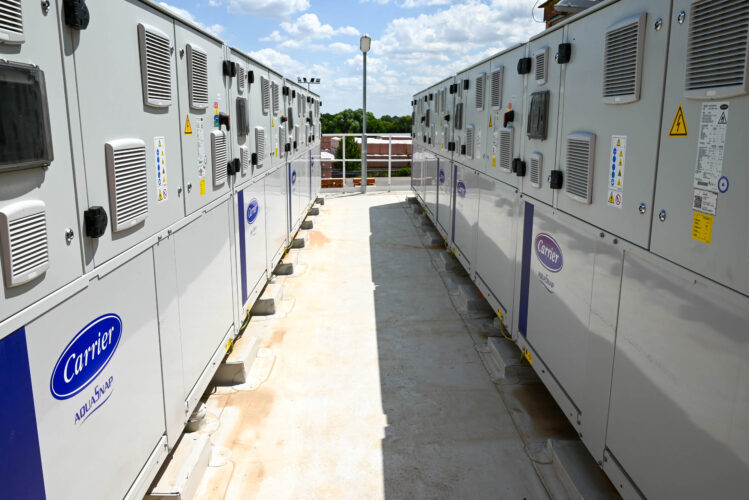
PS 111 Heat Pumps
4 air-to-water heat pumps; 2 hot-water buffer tanks; 1 hot-water circulation pump; 2 expansion vessels; 2 finned air-to-water heat exchangers with capacities of approximately 450 kW and 530 kW, respectively; 2 radial drying-air exhaust fans


Project Result
This project represented our second EPC contract for Wienerberger. Building on the experience gained during a similar decarbonisation project at the Wienerberger brickworks in Zlaté Moravce, we successfully implemented a comprehensive package of measures at the Boleráz plant.
The project included a set of interconnected improvements covering drying, firing, and raw material preparation processes, all aimed at systematically reducing the plant’s dependence on natural gas. By combining waste heat recovery, heat pump technology, combustion process optimisation, and the replacement of fossil additives with biogenic alternatives, we achieved a significant increase in the overall energy efficiency of the production process.
The implemented measures resulted in a measurable reduction in natural gas consumption of approximately 30–35 % on average, leading directly to lower CO₂ emissions and reduced operating costs. The project also improved process stability and controllability, positively influencing production quality and long-term operational sustainability.
Furthermore, the project creates a solid foundation for future reductions of the plant’s carbon footprint and serves as a practical example of successful decarbonisation in an energy-intensive industrial environment.